
Buying guides
PoE Injector or PoE Switch for CCTV Cameras?
A PoE injector suits one camera. For two or more, a PoE switch is usually the better buy. Match the standard and watts, and keep each cable run within 100 m.
A PoE injector adds power to one network cable, so a single PoE camera can run from a switch or recorder that has no PoE ports. It suits one camera. Once you have two or more cameras, one PoE switch is usually the better buy, because it powers every camera from one box with one mains lead and no extra plugs. This guide shows how an injector works, when it is enough, and what to match before you choose either.
What a PoE injector does
An injector has two RJ45 sockets and a mains power supply. The data cable from your router, switch or recorder goes into the data socket. A second cable runs from the injector's power-and-data socket to the camera. The injector puts power onto the spare conductors, so the camera gets both from a single cable. The camera must be PoE-capable, and the injector must be near a mains socket, because that is where it gets its power.
One camera: an injector can do the job
For a single camera on a network that has no PoE, such as a router and a plain switch, an injector is the simple answer. You add it at the equipment end of the cable and nothing else in the system changes. It can also help when you add one extra camera to a switch that has no PoE ports left. The mains plug then sits at the switch end, not out by the camera.
Several cameras: a switch is usually better
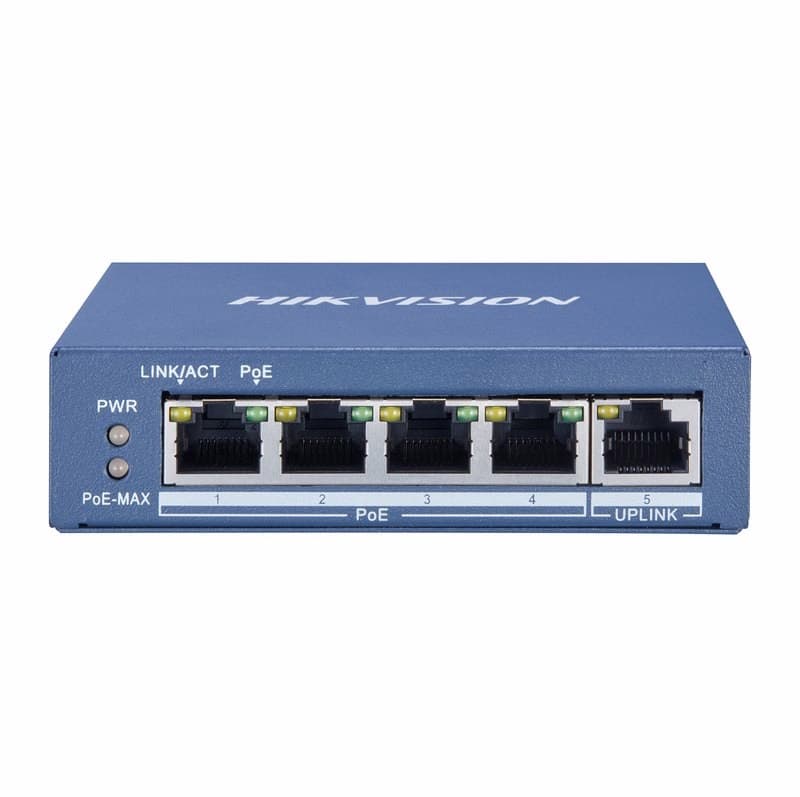
Every injector is another box, another power supply and another mains socket. With four cameras you would have four of each, plus the cabling to tidy. A PoE switch replaces them with one unit that has the ports built in. Our Hikvision DS-3E0505P-E has four Gigabit PoE ports and one Gigabit uplink port. It supports IEEE 802.3af and IEEE 802.3at, with up to 30 W from each PoE port and a total PoE budget of up to 60 W. Plug-and-play, it needs no setup. For more cameras, browse the 8-port PoE switches, and add up each camera's watts before you choose.
We stock PoE switches rather than injectors, which matches the way most CCTV systems are built: an NVR or switch in one place and cameras on cable runs out from it. If your system really is one camera on a non-PoE network, ask us before ordering and we will help you size it.
Match the standard and the watts
Whichever you choose, check three things against the camera's datasheet:
- The standard. Cameras ask for IEEE 802.3af or IEEE 802.3at. A device that supports 802.3at can power an 802.3af camera, but the reverse does not hold. Our PoE camera voltage guide explains the basics.
- The watts. Use the camera's maximum draw, not its typical draw. An injector powers one port, so its rating must cover that camera. A switch must cover every camera at once within its total budget. The PoE calculator adds the figures for you.
- The speed. Gigabit ports suit higher-resolution cameras and keep the link from becoming the bottleneck, so avoid an injector or switch limited to 100 Mbps unless the camera is low-bitrate.
The 100 m limit applies to both
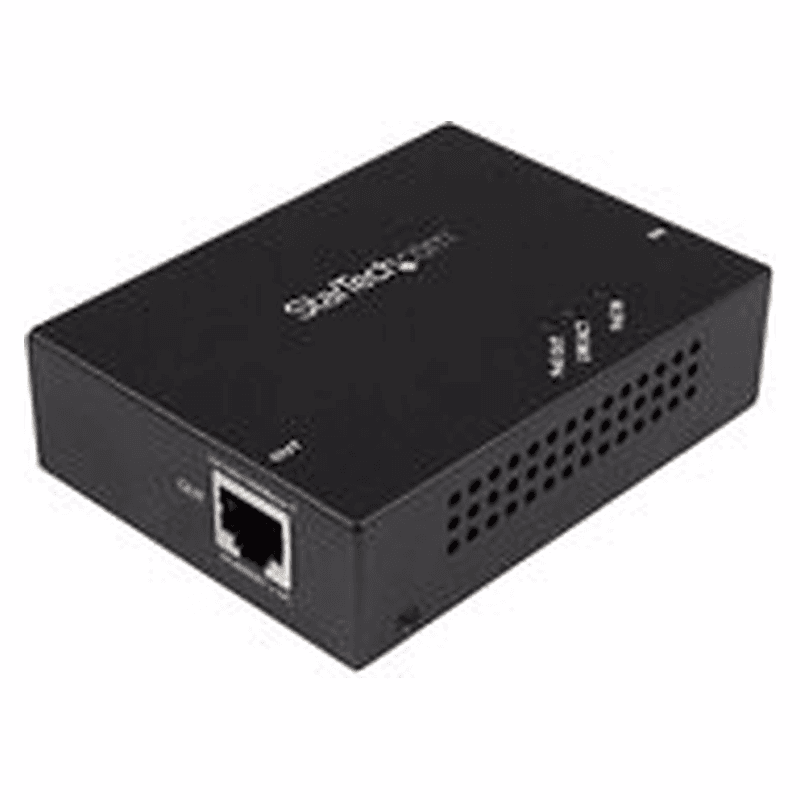
An injector does not extend the distance. The cable from the injector or switch to the camera is limited to 100 metres, set by the IEEE 802.3 Ethernet standards, and the injector counts as the start of that run. For a longer route, a PoE extender fed by the upstream port adds another section. Our PoE Extender 100m supports 802.3af and 802.3at and takes its power from the upstream PoE switch or injector, with no separate supply. Our PoE extender guide covers how to plan the run. The standards are published by the IEEE 802.3 Ethernet Working Group.
Which should you buy?
Pick an injector for one camera on a network without PoE, or for a single extra camera. Pick a switch for two or more cameras, and choose it by total budget in watts, not by port count. If you may add cameras later, buy the next size up now. A 4-port PoE switch is a good start for a small home or shop system.
Parts named here
- Part number DS-3E0505P-EHikvision DS-3E0505P-E 4-Port Gigabit PoE Unmanaged Switch, 60W PoE Budget
- Part number POE-EXTENDER-100MGigabit PoE Extender 100m, RJ45 PoE Repeater, IEEE 802.3af and 802.3at
Frequently asked questions
Can I use a PoE injector with a PoE switch?
You can, but it is rarely needed. A PoE switch already powers its cameras. Using an injector on a PoE port as well gives the camera nothing extra, and some devices can be damaged by two power sources.
Does a PoE injector make the cable run longer than 100 m?
No. The 100 m limit applies from the injector to the camera. A PoE extender adds a further section for longer routes.
Does an injector work with any IP camera?
Only with PoE cameras, and the injector must support the camera's standard, 802.3af or 802.3at, and its maximum watts. Check the camera's datasheet.
Sources & references
Part types on this subject
- PoE injector
- PoE switch
- PoE
- IP cameras
Written by
CCTV Gear team